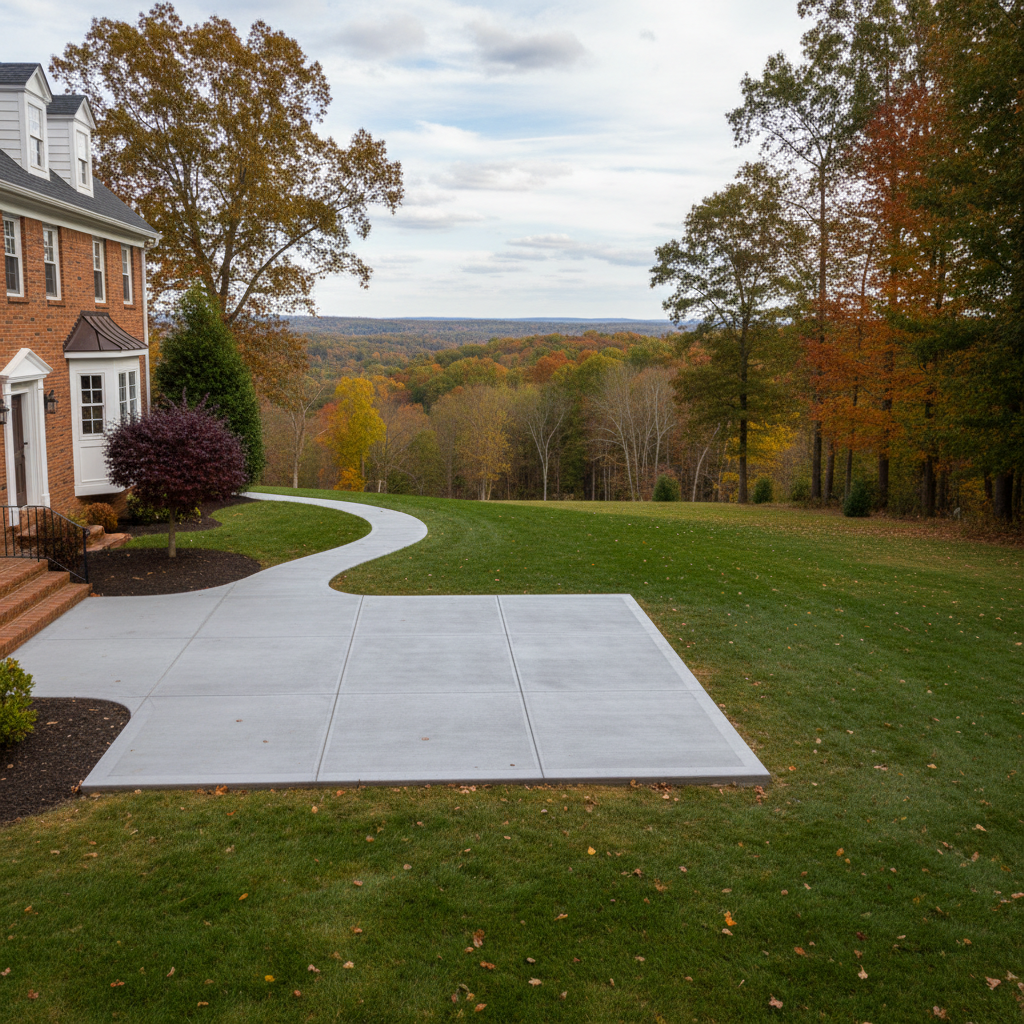
Concrete takes a beating here in Richmond. Between the clay-heavy soil shifting after a heavy summer downpour down in Fan district alleyways and those random freezing snaps we get in January, your driveway and patio have to work overtime. If you want your slabs to last more than a few years without cracking or scaling, you have to pay attention to the calendar.
Timing Your Pour Around Richmond Weather
You cannot just pour concrete whenever the mood strikes. Our spring and fall are prime windows. Summer heat is brutal on fresh mud; it cures too fast and shrinkage cracks pop up before you even grab a trowel. If we are pouring in July, we are starting at dawn and using retarders. Winter is a whole different beast. Freezing temperatures turn the water inside green concrete into ice crystals, completely destroying the structural integrity. If daytime temps drop below forty degrees and are not climbing, we wait.
Summer Heat and Humidity Realities
August humidity in RVA feels like walking through soup. While humans hate it, concrete actually cures hard, but surface drying happens too fast. If your contractor is not spraying down fresh flatwork or applying a curing compound right away, you are looking at a weak top layer that flakes off by winter. Keep your sprinklers off the new patio for a solid week.
Winterizing Against the Freeze-Thaw Cycle
Water gets into tiny pores in your concrete, freezes, expands, and pops the surface right off. We see this all the time on older driveways in Bon Air. Seal your concrete every couple of years before winter hits. And please, skip the rock salt. Use sand or calcium chloride for traction instead. Rock salt destroys the paste on top of the concrete and eats away at the slab.
RVA Classic Concrete sees what happens when weather gets ignored. Keep your joints sealed, clear the wet leaves off in autumn so mold does not eat the finish, and call RVA Classic Concrete if you are planning a project and want to time it right.