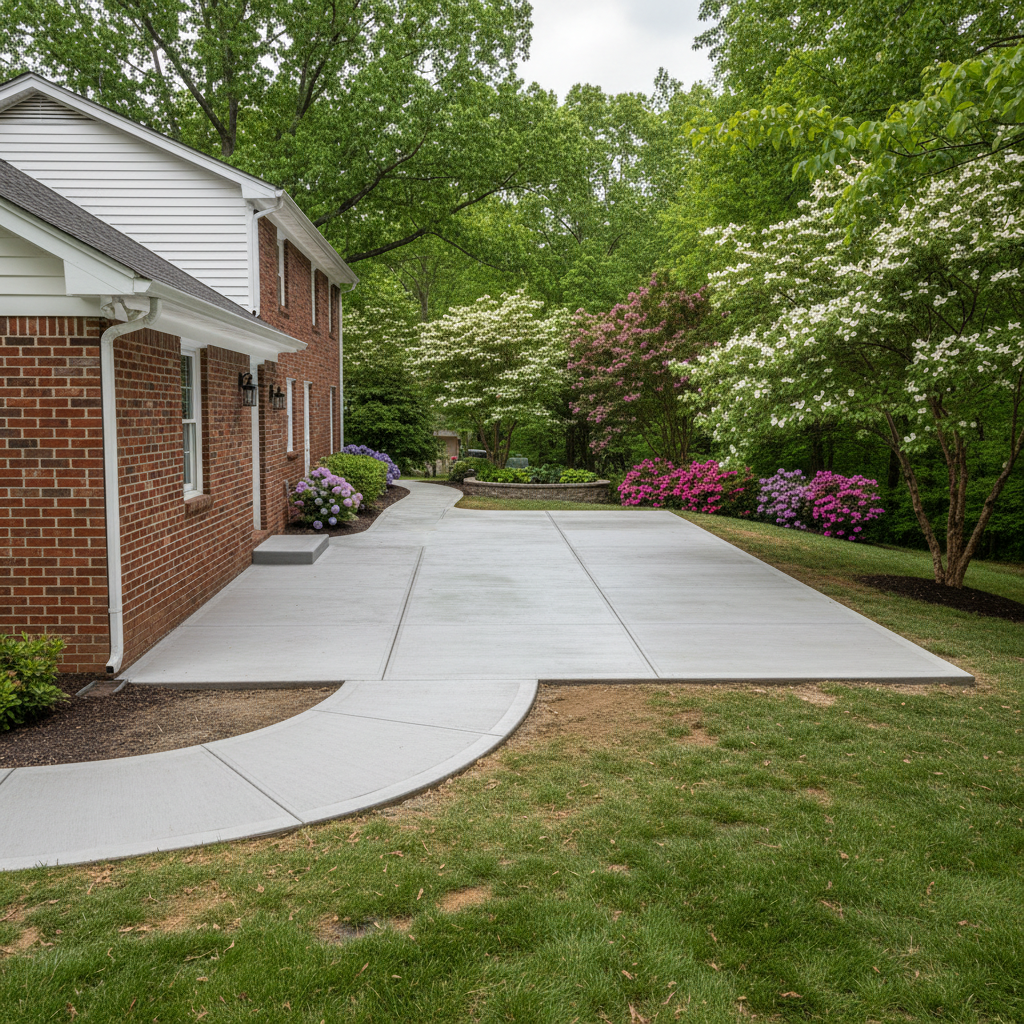
Alright, let's talk concrete here in Richmond. I get a lot of calls from folks wanting new patios, driveways, or walkways, and one of the first things we usually discuss is timing. It’s not just about when you’re ready; it’s about when the concrete is ready to be poured and cured properly. Our climate here in Central Virginia, with its hot, humid summers and often unpredictable winters, really dictates the best approach.
The Best Times to Pour Concrete in Richmond
You might think any sunny day is a good day for concrete, but that's not quite true. Extreme temperatures, either too hot or too cold, can mess with the curing process, leading to weaker concrete or surface issues down the line. We want your concrete to last, so getting it right from the start is key.
Spring (Late March to Early June): This is prime time. The ground has thawed, temperatures are usually mild and consistent, and we generally get enough moisture without it being excessive. The concrete can cure slowly and evenly, which makes for a stronger, more durable product. You'll see a lot of concrete trucks out and about during these months for a reason.
Fall (Late September to Early November): Another excellent window. Similar to spring, the temperatures are usually cooperative, not too hot, not too cold. The ground is still warm enough to help the concrete set up nicely, and we avoid the scorching summer sun that can cause rapid drying and cracking. If you're planning a project, these two seasons are what I'd recommend aiming for.
When to Be Cautious (or Avoid Altogether)
Now, let's look at the flip side. There are times when pouring concrete just isn't a good idea, or at least requires a lot more planning and precautions.
Summer (Mid-June to Mid-September): It gets hot here in Richmond, really hot and humid. When temperatures consistently hit the high 80s and 90s, concrete can dry too fast. This rapid drying can lead to surface cracking, called 'plastic shrinkage cracking,' because the surface shrinks before the rest of the slab. If we absolutely have to pour in summer, we'll take extra steps like using retarders in the mix, misting the slab, or pouring early in the morning. But honestly, it's not ideal.
Winter (Mid-November to Mid-March): Freezing temperatures are concrete's enemy during the curing phase. When water in the concrete mix freezes, it expands, creating internal stresses that can significantly weaken the concrete and lead to spalling or scaling. We generally avoid pouring when temperatures are expected to drop below 40°F within the first 72 hours of the pour. If a winter pour is unavoidable, we'd use special admixtures, insulating blankets, and heaters, but it adds cost and complexity. Plus, the ground in some older Richmond neighborhoods, especially those with a lot of clay, can stay frozen longer, which isn't good for the sub-base.
Protecting Your Concrete Investment Year-Round
Once your new concrete flatwork is in, you want it to look good and last for decades. Here's how you can help make that happen:
Curing is Crucial: After we pour, we'll talk about curing. This isn't just letting it dry; it's about keeping the concrete moist for as long as possible – ideally 7 days, sometimes longer. This allows the concrete to gain its full strength. We might use curing compounds, wet burlap, or plastic sheeting. Don't walk on it too soon, and definitely don't drive on it for at least a week, sometimes more depending on the mix and temperature.
Sealing: This is a big one, especially with our freeze-thaw cycles. A good quality penetrating sealer should be applied after the concrete has fully cured (usually 28 days). This sealer helps repel water, oil, and other stains, and it protects against de-icing salts. I usually recommend resealing every 2-5 years, depending on traffic and exposure. It's like sunscreen for your concrete.
Avoid De-Icing Salts: I know it's tempting when ice hits, but rock salt (sodium chloride) and other de-icing chemicals can be really damaging to concrete, especially newer concrete. They can cause the surface to spall or flake off. Sand is a much safer alternative for traction. If you absolutely must use something, look for products labeled 'concrete safe' or those containing calcium magnesium acetate (CMA), but even those should be used sparingly.
Clean Regularly: A simple sweep and occasional rinse with a hose can prevent dirt and grime from building up and staining your concrete. For tougher stains, a mild detergent and a stiff brush usually do the trick. Avoid harsh chemicals or pressure washing at extremely high settings, as these can damage the surface.
Watch for Drainage: Make sure water drains away from your concrete slabs, not towards them or underneath them. Poor drainage can lead to erosion under the slab, causing settling and cracking. If you see puddles forming, address the issue with your landscaping or gutters.
Taking care of your concrete isn't rocket science, but it does require a little attention. If you've got questions about your existing concrete or are thinking about a new project, give us a call at RVA Classic Concrete. We're always happy to talk through your options and make sure you get a durable, good-looking result that stands up to whatever Richmond weather throws at it.