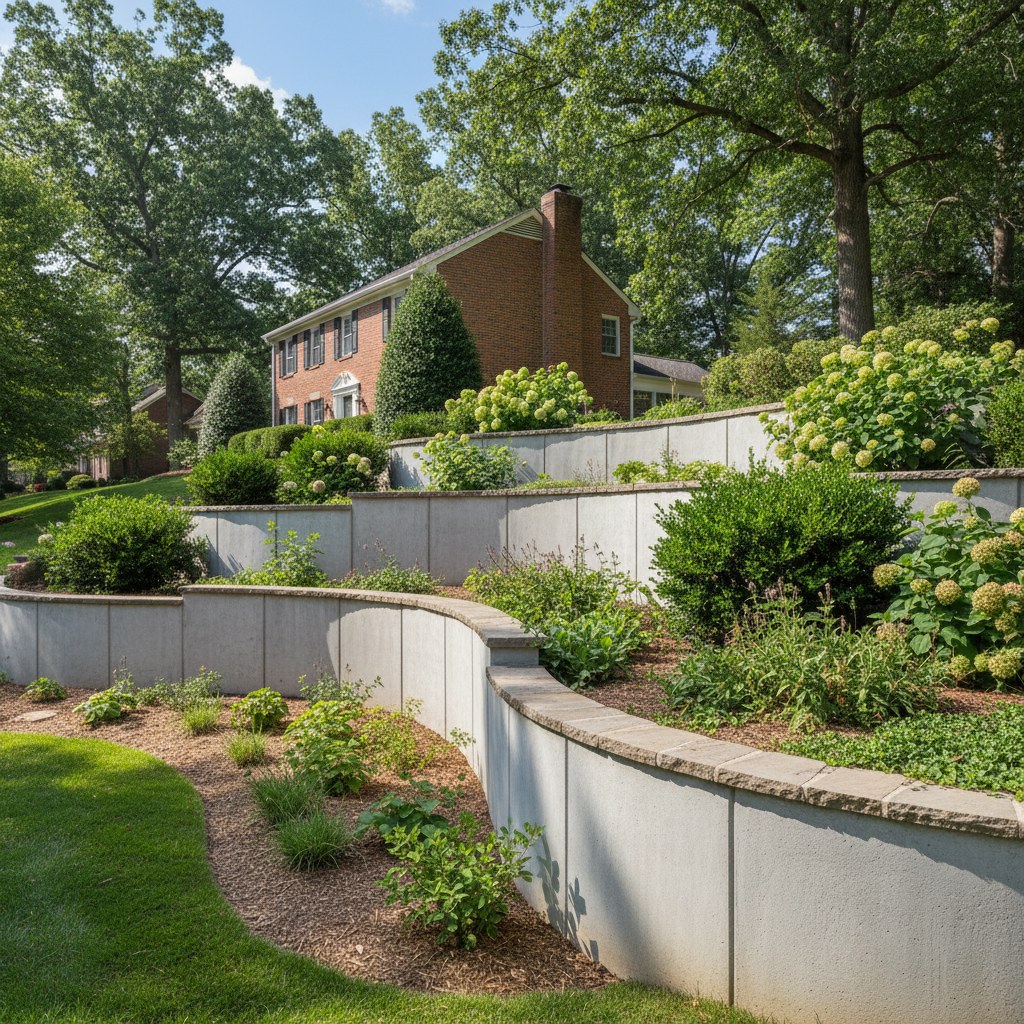
Building a concrete retaining wall is a big deal. It's not just about aesthetics; it's about structural integrity, drainage, and protecting your property. Over the years, working with RVA Classic Concrete, I've seen my fair share of retaining wall projects go sideways, usually because of a few common mistakes homeowners make right from the start. You don't want to be one of them, so let's talk about what to watch out for.
Mistake #1: Ignoring the Soil and Drainage
This is probably the biggest one, especially here in Richmond. We've got all sorts of soil around here, from that dense clay in places like the West End to the sandier stuff closer to the river. What's under your feet dictates a lot about how your wall needs to be built. If you don't account for hydrostatic pressure – that's the force of water building up behind the wall – you're asking for trouble. I've seen walls push out, crack, and even collapse because someone thought a few weep holes were enough. You need proper drainage systems, like gravel backfill and perforated pipes, to relieve that pressure. If a contractor isn't talking about your soil type and a comprehensive drainage plan, that's a huge red flag. They're either cutting corners or they don't know what they're doing.
Mistake #2: Going Cheap on Engineering and Permits
Look, I get it. Everyone wants to save a buck. But a retaining wall over a certain height – usually around 3 or 4 feet, depending on local codes – often requires engineering plans and permits. Trying to skip this step is a recipe for disaster. First, it's illegal, and the city can make you tear it down. Second, and more importantly, an engineer designs the wall to withstand the forces it'll face. They'll specify the right rebar, concrete strength, and foundation depth. Without that, you're guessing. And when you're guessing with something holding back tons of earth, it's not going to end well. A good contractor will insist on permits and, if needed, an engineer's stamp. If they tell you, "Oh, we don't need permits for that," run the other way.
Mistake #3: Picking the Wrong Contractor (or just the cheapest bid)
This goes hand-in-hand with the previous point. You're not just buying concrete; you're buying expertise. When you're getting bids, don't just look at the bottom line. Ask questions. A lot of questions. How long have they been doing retaining walls? Can they show you examples of their work? Do they understand local Richmond building codes? Are they licensed and insured? Do they offer a warranty on their work?
I've seen homeowners hire someone who gives them a super low price, only to find out later that the contractor used substandard materials, didn't pour a deep enough footing, or disappeared halfway through the job. Then you're stuck paying someone else more money to fix a mess that could've been avoided. A reputable company, like RVA Classic Concrete, might not be the absolute cheapest, but we'll deliver a quality, durable wall that you won't have to worry about for decades.
Mistake #4: Not Thinking About Maintenance (or lack thereof)
Concrete retaining walls are pretty low maintenance, but they're not zero maintenance. You still need to keep an eye on them. Are there trees growing too close whose roots could eventually compromise the wall? Is debris building up at the base, blocking drainage? Are there any small cracks appearing that might indicate a bigger issue? Catching these things early can save you a lot of money and headaches down the line. A good contractor will give you some basic maintenance tips. If they act like once it's built, you never have to think about it again, they're not being entirely honest with you.
Mistake #5: Forgetting About Aesthetics and Integration
While function is key, you also want your retaining wall to look good and blend with your home and landscaping. I've seen some walls that look like they were just plopped down without any thought to the overall design. Think about the finish of the concrete – do you want a smooth surface, or something with a texture? What about color? How will it transition into your existing landscaping? A good contractor won't just build a wall; they'll help you plan one that enhances your property's curb appeal. Don't be afraid to ask for design ideas or look at different finishes. It's a permanent fixture, so make sure you'll be happy looking at it every day.
So, there you have it. Building a concrete retaining wall is a significant investment, and avoiding these common pitfalls will save you stress, money, and regret. Do your homework, ask the right questions, and choose a contractor who knows their stuff.