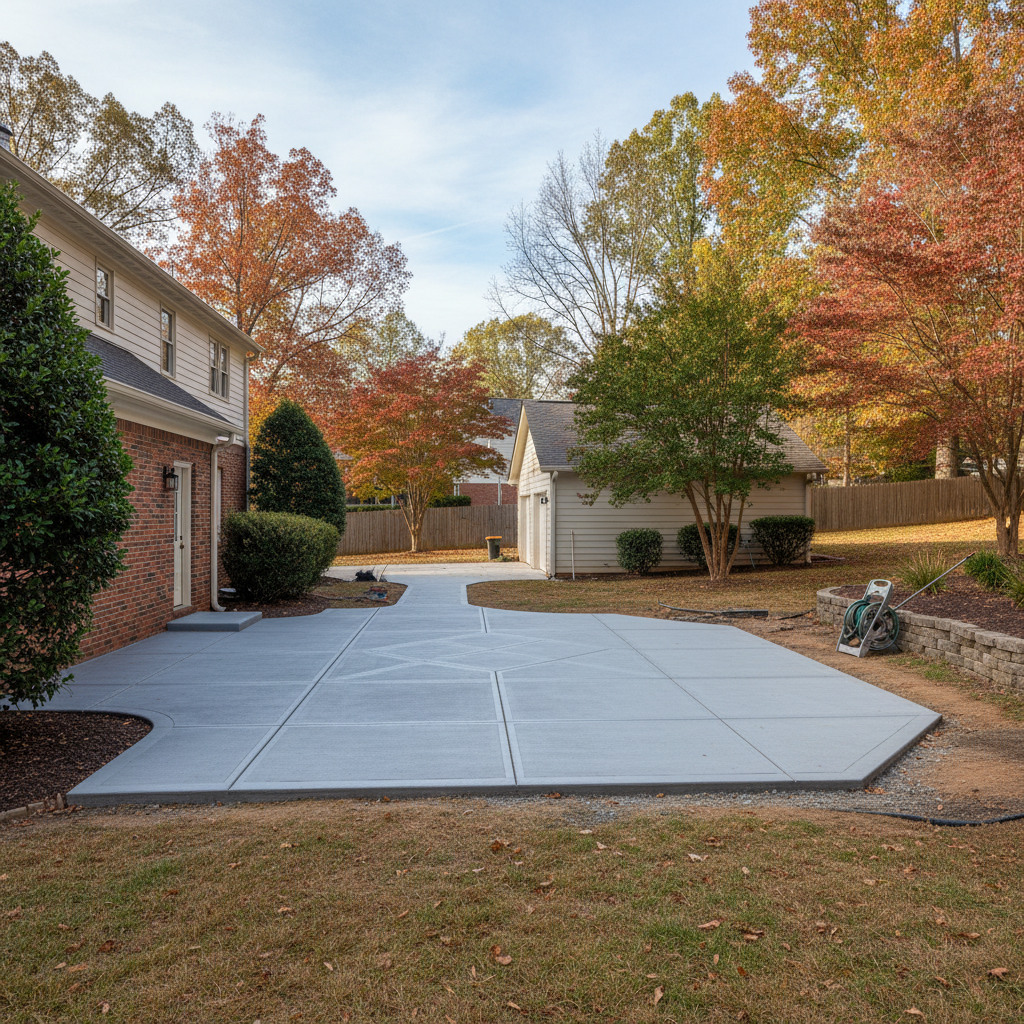
Richmond weather can not make up its mind. One week we are sweating through a humid July afternoon in the Fan, and the next we are dealing with a sudden freeze that catches everyone off guard. If you are planning a new concrete patio, concrete driveway, or concrete walkway, that shifting climate matters a lot more than you might think.
Concrete does not just dry out; it cures through a chemical process called hydration. When the thermometer swings wildly, that process gets thrown off. Here is what you have got to watch out for around Central Virginia.
Spring and Fall: The Sweet Spots
Ask any experienced crew at RVA Classic Concrete and they will tell you that spring and autumn are prime times for concrete flatwork. The air is mild, the sun is not trying to bake the moisture out of the slab before we can even finish it, and nights stay safely above freezing. If you can schedule your concrete project during these shoulder months, you will get a much stronger, more predictable cure.
Beating the Richmond Summer Heat
Summer concrete pours here come with unique challenges. When ambient temperatures climb past ninety degrees and the humidity is thick enough to chew, fresh concrete sets up way too fast. That rapid moisture loss leads directly to surface cracking and weak spots.
- We start early, sometimes before dawn, just to beat the worst of the midday sun.
- Subgrades get thoroughly dampened down so the dry ground does not suck the water right out of the mix.
- Curing compounds and damp blankets go on immediately to lock in moisture.
Navigating Winter Freezes
Winter in RVA is not always brutal, but nighttime lows dipping below thirty-two degrees will ruin fresh concrete overnight. If water trapped inside the matrix freezes, it expands, and your brand-new concrete slab turns into a crumbling mess. RVA Classic Concrete uses heated mixes and heavy insulating blankets when cold weather catches us between projects, but waiting for a warm break is usually the smartest move.
Protecting Your Investment Year-Round
Once your concrete slab is down and properly cured, keeping it looking great comes down to basic maintenance. Richmond red clay expands and contracts with moisture, putting stress on concrete slabs. Seal your concrete every couple of years to keep water out, and keep heavy de-icing salts off the surface during winter storms. A little prevention goes a long way toward making sure your concrete lasts for 15 to 20 years or more.