Alright, let's talk foundations. If you're building a new home, adding an extension, or even putting up a serious detached garage here in Richmond, the foundation is literally where everything starts. It's not the flashiest part of a build, sure, but it's probably the most important. Skimp here, and you'll be kicking yourself for decades. So, what's it actually going to cost you?
What Makes Foundation Costs Go Up (or Down)
You probably already guessed it: "it depends" is the quick answer. But I won't just leave you hanging with that. A few key things really shift the numbers when it comes to foundation pricing:
- Size and How Complicated It Is: This one's a no-brainer. A small, simple slab for a shed costs way less than a full basement foundation for a 3,000 sq ft house. If your design has lots of weird angles, different levels, or needs complex footings, expect the price to climb.
- What Kind of Foundation You Need: Are we talking a simple slab-on-grade, a crawl space, or a full basement?
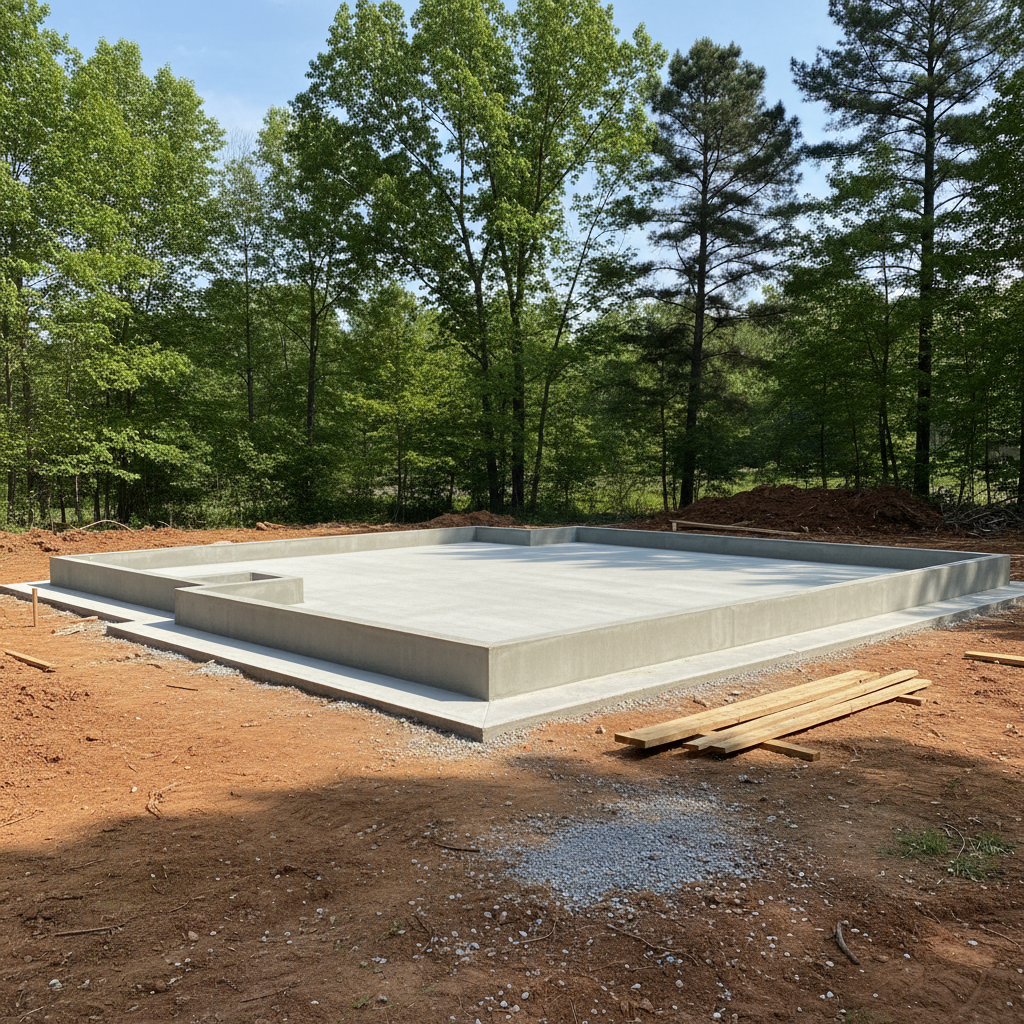
- Slab-on-Grade: Usually the cheapest option. It's just a concrete slab poured right onto the ground, often with thicker edges for support. Great for garages or smaller buildings.
- Crawl Space: More expensive than a slab. Here, you're building perimeter footings and walls, then a floor system (often wood joists and subfloor) over a shallow space. This is pretty common in many older Richmond neighborhoods, especially places with rolling terrain like the Fan or Museum District, where basements might be tough because of high water tables.
- Full Basement: This is the priciest one. You're digging deep, pouring extensive footings, tall concrete walls, and then a slab floor. But hey, you get a whole lot of usable space out of it.
- Site Conditions: This is a huge factor, especially around here. Is your lot flat and easy to get to? Or is it sloped, rocky, or does it have bad soil that needs extra compaction or even replacement? We've seen some tricky spots in Chesterfield and Henrico where the ground just isn't ideal, meaning more prep work and specialized equipment. And don't even get me started on tree roots if you're building near an old oak!
- How Much Digging Is Needed: How much dirt needs to move? The deeper you go, the more time and equipment it takes. Plus, you might have to pay to have that excavated soil hauled away.
- Reinforcement: Building codes set minimum rebar and mesh requirements, but some projects or soil conditions might need more. More steel means more money, naturally.
- Concrete Mix Strength: Most residential foundations typically use 3000-4000 psi concrete. If your engineer asks for a stronger mix for some reason, that'll add a little extra to the bill.
- Accessibility: Can a concrete truck easily reach the pour site? If we have to use a pump truck because of distance or obstacles, that's an extra cost—usually a few hundred to over a thousand dollars, depending on the pump size and how long it's needed.
Typical Cost Ranges in Richmond, VA
Okay, let's get down to some actual numbers. These are rough estimates for a standard residential project in the Richmond area, as of late 2023/early 2024. Always get a detailed quote for your specific project, though.
- Slab-on-Grade (for a garage or small addition, 500-1000 sq ft): You're probably looking at $7 - $12 per square foot. So, a 600 sq ft garage slab might fall in the $4,200 - $7,200 range. This includes digging, the gravel base, vapor barrier, rebar/mesh, and the concrete pour and finish.
- Crawl Space Foundation (for a typical home, 1500-2500 sq ft footprint): This gets more involved. Expect to pay anywhere from $15 - $25 per square foot of footprint. For a 2,000 sq ft house, that could be $30,000 - $50,000. This covers digging, footings, block or poured concrete walls, waterproofing, and backfill. It generally doesn't include the floor joists or subfloor, as that's usually part of the framing cost.
- Full Basement Foundation (for a typical home, 1500-2500 sq ft footprint): This is the big one. It will run you $25 - $40+ per square foot of footprint. For that same 2,000 sq ft house, you're looking at $50,000 - $80,000+. This includes a lot of digging, deeper footings, taller poured concrete walls, waterproofing, drain tile, backfill, and the concrete slab floor.
Remember, these are just the foundation costs. They don't cover framing, plumbing, electrical, or any of the other trades.
What Should Be in Your Foundation Quote?
When RVA Classic Concrete gives you a quote, or any other reputable contractor for that matter, make sure it's detailed. It should clearly spell out:
- Excavation: What's included? Rough grade, fine grade, hauling away extra dirt?
- Footings: Their size, depth, and reinforcement.
- Walls: The type (poured concrete, block), height, thickness, and reinforcement.
- Slab: Thickness, reinforcement (rebar/mesh), and vapor barrier.
- Drainage/Waterproofing: If it applies (especially for basements or crawl spaces).
- Materials: Concrete strength, rebar size/spacing, type of gravel.
- Labor: The crew's time.
- Permits: Who is responsible for getting them? (Often the general contractor, but it's good to clarify.)
- Site Prep: Any specific needs like removing tree roots or special compaction.
How to Avoid Overpaying
This is pretty simple, but people often miss it:
- Get Multiple Bids: Don't just go with the first person you talk to. Get at least three detailed quotes from contractors who are reputable, licensed, and insured.
- Check References: Talk to past clients. Look at their previous work.
- Don't Automatically Pick the Cheapest Bid: A bid that's significantly lower often means corners are being cut, or they've overlooked something. You really don't want surprises when it comes to your foundation.
- Understand the Scope: Make sure every bid is for the exact same work. If one bid is for a slab and another is for a crawl space, you can't compare them fairly.
- Ask Questions: If you don't understand something in the quote, just ask. A good contractor will take the time to explain it to you.
A solid foundation is an investment in how long your home lasts and how stable it is. Don't try to pinch pennies here. Do your homework, get good bids, and you'll be set up right.