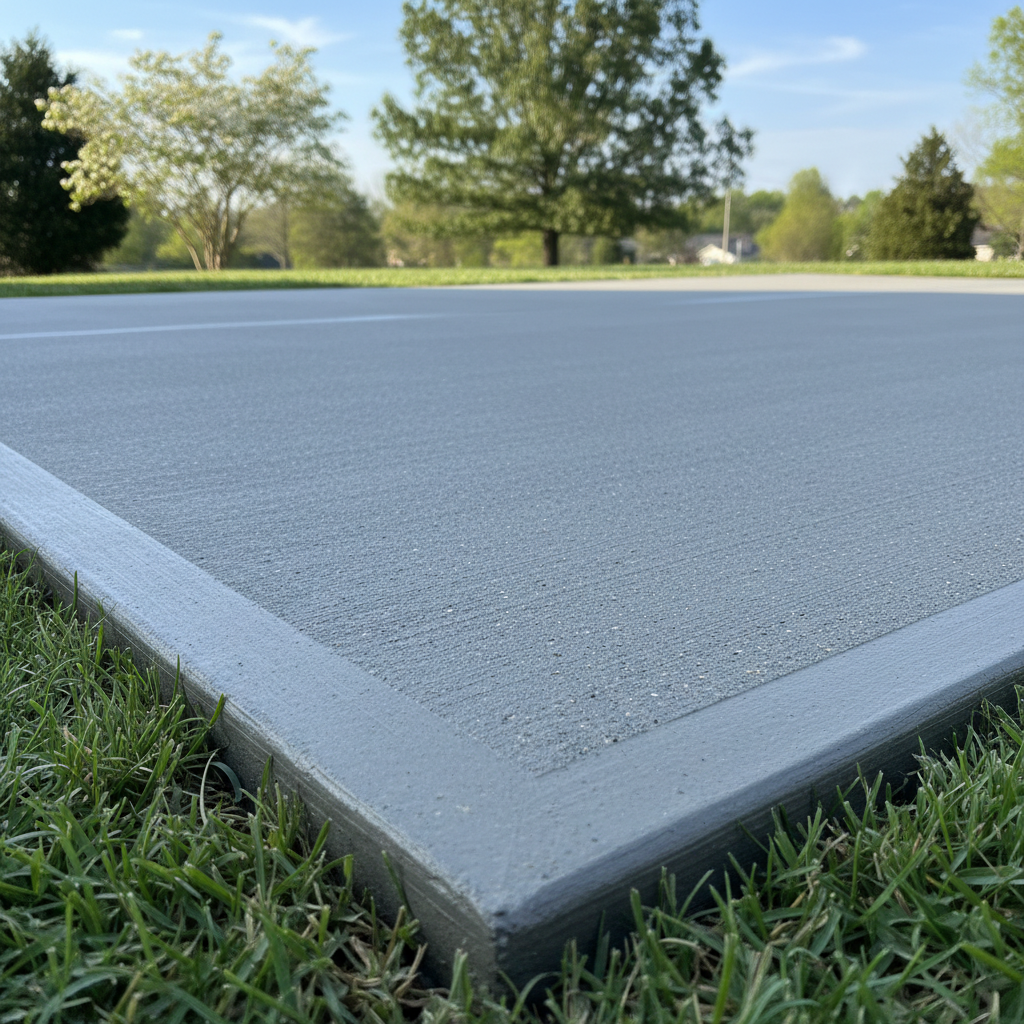
Let us talk about Concrete Flatwork. You see Concrete Flatwork all over Richmond, VA. Driveways, sidewalks, patios, and shed pads are all types of Concrete Flatwork. These flat, horizontal concrete surfaces make up a big part of your home's exterior. Many people think pouring concrete is just a simple mix-and-pour job. However, there is much more to it if you want it to last. You want your Concrete Flatwork to last, especially with the Richmond, VA weather. Our humid summers as well as our icy winters can really mess with a poorly laid concrete slab.
Before You Even Think About Pouring Concrete Flatwork
Preparation is very important with Concrete Flatwork. This preparation is the foundation of your foundation. If you do not prepare properly, you will deal with cracks and uneven surfaces later on. RVA Classic Concrete always makes sure the preparation is done right.
- Site Clearing and Excavation for Concrete Flatwork: Our first step is to clear the area for your Concrete Flatwork project. We get rid of all the grass as well as roots as well as rocks as well as any other junk. Then, we excavate to the right depth. For most Concrete Flatwork in Richmond, VA, we dig down 6 to 8 inches. This makes room for your base as well as the concrete itself.
- Subgrade and Base Preparation for Concrete Flatwork: This is where many do-it-yourself projects go wrong. You need a stable, uniform subgrade for your Concrete Flatwork. This means compacting the soil thoroughly. If you are pouring on virgin clay, that might be okay. Most Concrete Flatwork projects will need a layer of gravel or crushed stone. This layer is usually about 4 inches thick. This layer also gets compacted. This helps with drainage as well as gives your concrete a solid footing. Do not skip the compaction. It prevents settling as well as cracking in your Richmond, VA Concrete Flatwork.
- Forms and Reinforcement for Concrete Flatwork: Our team will build sturdy forms to hold the concrete in place. These forms also define the shape of your Concrete Flatwork. We use 2x4s or similar lumber. We make sure they are level. Here is a good tip for Richmond, VA homeowners: you actually want a slight slope away from your house for drainage. This slope is about 1/8 to 1/4 inch per foot. Standing water is a concrete killer. For strength, especially with Richmond's freeze-thaw cycles, you will almost always need reinforcement. This reinforcement can be wire mesh or rebar. It goes in the middle of the concrete slab. It is supported by little chairs or blocks, not just laying on the ground.
- When to Call RVA Classic Concrete: If your Concrete Flatwork project is large, you should call us. If it involves significant excavation, you should also call us. If you are dealing with tricky slopes or soil conditions, our team can help. Foundations, big driveways, or anything structural really needs an expert eye. Getting the base right is important. RVA Classic Concrete has the heavy equipment as well as the experience to do it properly in Richmond, VA.
During the Concrete Flatwork Pour: Timing is Important
Once the concrete truck arrives, it is time to work. Concrete does not wait around. So, you need to be ready for the Concrete Flatwork pour.
- Mixing and Pouring Concrete Flatwork: If you are mixing bags, make sure you follow the water-cement ratio carefully. Too much water weakens the concrete. If you are getting a ready-mix delivery for your Richmond, VA Concrete Flatwork, make sure the dispatcher knows what you are doing. They can recommend the right mix. Before you pour, dampen the base with a garden hose. This keeps the fresh concrete from drying out too fast. Then, get that concrete into the forms. Spread it evenly.
- Leveling and Floating Concrete Flatwork: This is where you start shaping the surface of the Concrete Flatwork. Use a screed, which is a long, straight board, to level the concrete. Move it back and forth like a saw. After screeding, use a bull float or a hand float to smooth the surface. This also brings the fine material to the top.