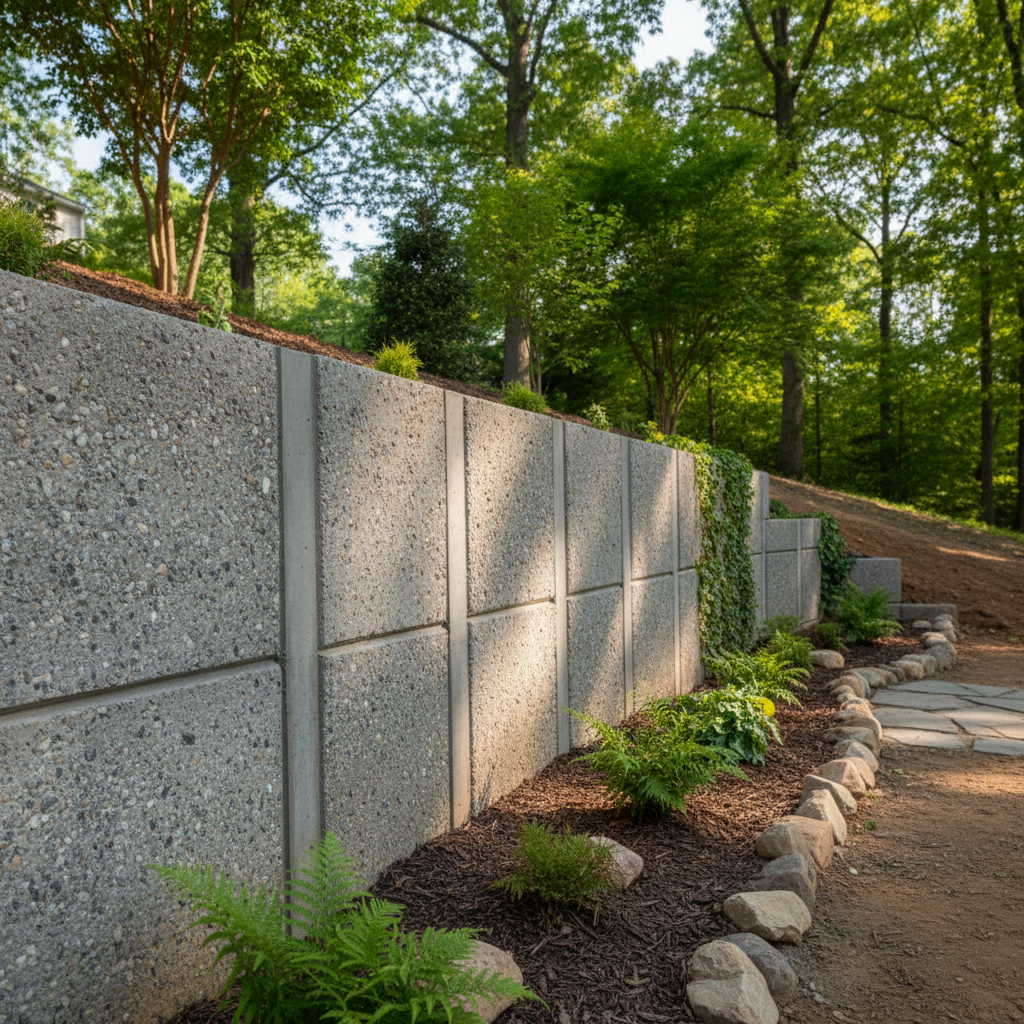
So, you’ve got a slope in your yard, maybe it’s eroding, or you just want to create some usable, level space. A concrete retaining wall is a solid solution. It’s tough, it lasts, and it can really transform your landscape. But before you grab a shovel, let’s talk about what goes into one of these projects, and whether it’s something you should tackle yourself or if it’s time to bring in a crew like RVA Classic Concrete.
Before You Start: Planning & Permits
First things first: planning. You can’t just dig a trench and pour concrete. There’s engineering involved, especially if the wall is going to be holding back a lot of soil or if it’s more than a few feet high. What’s the purpose of the wall? Is it decorative, or is it structural, holding back a significant slope? The height of the wall is a huge factor here. Anything over about three or four feet, and you’re almost certainly looking at needing a professional design and a permit from the City of Richmond or Chesterfield County. Believe me, you don’t want to build something that fails or gets you in trouble with the city later.
You’ll also need to consider drainage. Water is the enemy of any retaining wall. If you don’t plan for proper drainage behind the wall, water will build up, create hydrostatic pressure, and eventually, it’ll push your wall over. This is where things like gravel backfill, perforated drain pipes (weep holes), and proper grading come into play. It’s not just about the concrete; it’s about managing the water.
Another big one: utilities. Before you dig a single scoop of dirt, call 811. Seriously, do it. You don’t want to hit a gas line or an electrical conduit. It’s not just dangerous; it’s expensive. They’ll come out and mark everything for free. No excuses on this one.
During the Build: DIY vs. Professional
Alright, let’s talk about the actual work. For a small, purely decorative wall, say 18 inches high or less, you might be able to handle it yourself if you’re handy and have some experience with concrete. You’ll need to dig a proper footing, set rebar, build forms, mix and pour concrete, and then cure it properly. It’s a lot of physical labor, and getting the forms perfectly straight and level is trickier than it looks. You’ll also need access to tools like a concrete mixer, levels, rebar cutters, and potentially a tamper.
But here’s the honest truth: for most structural retaining walls, especially those over three feet, it’s a job for the pros. Why? Because the consequences of getting it wrong are severe. A failing retaining wall isn’t just an eyesore; it can cause serious damage to your property, create safety hazards, and cost a fortune to fix. Professionals have the experience to assess soil conditions (which can be tricky here in Richmond, especially with our clay soils), design the right footing and reinforcement, build robust forms, and pour concrete that will stand the test of time. They also have the heavy equipment to move serious amounts of dirt and concrete efficiently.
Think about it: a professional crew knows how to calculate the load, ensure proper rebar placement, and achieve the right concrete mix for strength and durability. They’ll also handle the permits and inspections, which can be a headache for a homeowner.
After the Project: Maintenance & Longevity
Once your concrete retaining wall is built, whether by you or a pro, it’s not entirely set it and forget it. Concrete is incredibly durable, but a little maintenance goes a long way. Keep an eye on the drainage. Make sure those weep holes aren’t clogged with leaves or dirt. If you see water pooling behind the wall, that’s a red flag. Check for any cracks. Small hairline cracks are often normal as concrete cures and settles, but larger, active cracks that are widening or showing displacement could indicate a bigger issue.
Keep vegetation away from the base and top of the wall. Roots can be surprisingly powerful and can compromise the structure over time. If you notice any bulging or leaning, especially after heavy rains, don’t ignore it. That’s when you need to call in an expert to assess the situation before it gets worse.
A well-built concrete retaining wall will last for decades, adding value and functionality to your Richmond home. Just make sure you approach the project with a clear understanding of the work involved and when it’s time to call in the experts to ensure it’s done right.